- Ankit parikh : +1-365-833-6555
- Dhwani Parikh +1-365-888-8955
- Indicanadfoodinc@gmail.com
How Private Labelling Helps Small Businesses Compete with Big Brands
Introduction
In today’s competitive marketplace, small businesses often face the daunting challenge of going up against established giants with deeper pockets, stronger distribution networks, and bigger marketing teams. But there’s a powerful tool that’s leveling the playing field: private labelling.
Private labelling allows businesses to sell products manufactured by another company under their own brand name. From food and beverages to herbal supplements and household essentials, private labelling is giving small businesses the chance to stand tall beside big brands, and in many cases, win consumer loyalty through authenticity, affordability, and innovation.
What is Private Labelling?
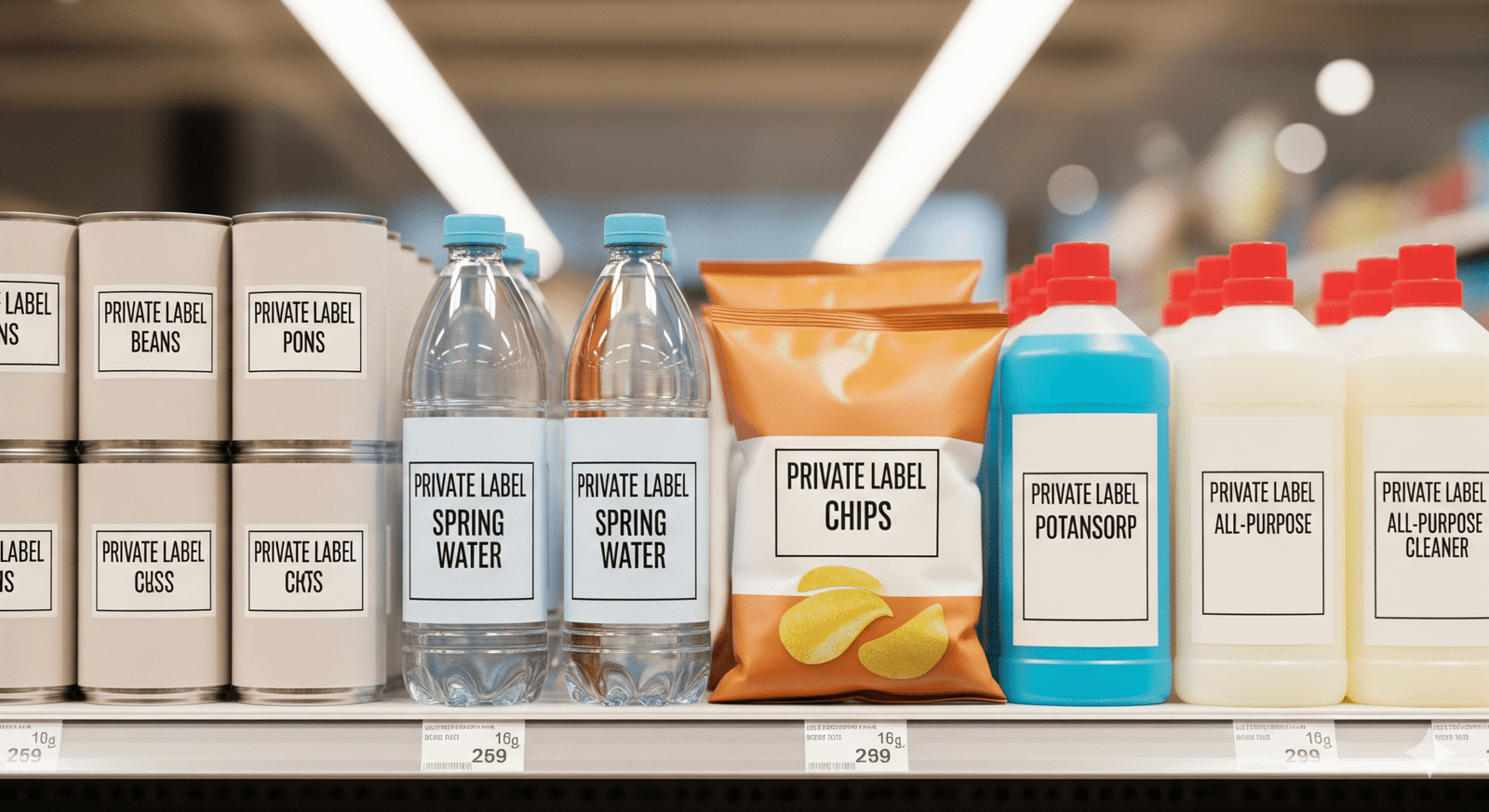
Private labelling is the practice of outsourcing production to a manufacturer while focusing on branding, packaging, and marketing. Retailers, entrepreneurs, or even startups can launch their own line of products without the massive investment required to build factories or manage large-scale supply chains.
It’s a proven model used by major supermarket chains, but now, thanks to growing demand and flexible manufacturing, small businesses too can take advantage of this approach.
1. Reducing Entry Barriers for Small Businesses
Traditionally, launching a product line meant high upfront costs — manufacturing equipment, staff, logistics, and quality control. With private labelling, these challenges are eliminated.
- Lower investment: Businesses don’t need their own factories.
- Faster go-to-market: Products can be launched within weeks, not years.
- Scalability: Start with small batches and expand as demand grows.
This accessibility allows even small retailers or e-commerce sellers to compete against multinationals.
2. Building a Unique Brand Identity
In a world of mass-produced goods, branding makes all the difference. Private labelling gives small businesses the creative freedom to design packaging, choose brand messaging, and position products to resonate with their target audience.
For example:
- An organic spice blend can be marketed as “family recipes passed down for generations.”
- A flour brand can highlight “farm-to-table freshness and purity.”
- Herbal teas can be branded with sustainability and wellness-focused storytelling.
This ability to connect with customers on an emotional level is often where small brands outshine big players.
3. Better Profit Margins and Cost Control
Private-label products usually cost less to produce compared to national or international brands. With lower production costs, small businesses can enjoy healthier margins while still offering competitive prices to consumers.
- This win-win scenario allows businesses to:
- Offer premium-quality goods at affordable prices.
- Invest saved costs into marketing, e-commerce, or customer experience.
Achieve profitability quicker than through traditional product launches.
4. Staying Agile and Trend-Focused
Big brands often move slowly due to corporate processes and large-scale operations. Small businesses, however, can use private labelling to quickly adapt to consumer trends.
Examples include:
- Launching a gluten-free flour range to meet dietary trends.
- Introducing eco-friendly packaging before it becomes mainstream.
- Creating limited edition or seasonal products to keep customers engaged.
This agility helps small businesses stand out and stay ahead of consumer demands.
5. Building Trust Through Quality and Transparency
Consumers once viewed private-label products as cheaper alternatives. Today, the perception has changed — thanks to higher quality, sustainable sourcing, and better branding.
Small businesses that partner with reliable manufacturers can offer products that rival or even surpass big brands in quality. By communicating transparency — sourcing details, sustainability practices, and certifications — small brands can build lasting trust with customers.
6. Case Study: The Food & Herbal Industry
Private labelling has been especially transformative in food and wellness. Supermarkets now stock shelves with their own branded pulses, flours, spices, and oils — often priced lower than global competitors. Similarly, in the herbal wellness market, small businesses are successfully launching ayurvedic supplements, teas, and oils under their own labels, catering to niche audiences that value authenticity.
These examples show that private labelling is not just cost-effective, but also consumer-approved.
7. The Role of E-Commerce and Global Trade
Online platforms like Amazon, Shopify, and regional marketplaces have further amplified the private labelling model. Small businesses can now:
- Sell private-label products globally without needing retail shelf space.
- Build digital-first brands with loyal online followings.
- Reach specific niches — like health-conscious families, cultural communities, or eco-friendly shoppers.
With globalization and simplified export processes, private-labelled goods can easily travel across borders, giving small brands international exposure.
8. Overcoming Challenges
Of course, private labelling comes with its own set of challenges. Small businesses need to:
- Select reliable manufacturing partners.
- Ensure consistent quality and compliance with local regulations.
- Invest in branding and marketing to stand out.
But with the right partnerships, these hurdles can be turned into opportunities.
Conclusion
Private labelling is more than just a cost-saving strategy — it’s a growth accelerator for small businesses. By eliminating barriers to entry, empowering unique branding, and ensuring better margins, it enables entrepreneurs to compete directly with global giants.