- Ankit parikh : +1-365-833-6555
- Dhwani Parikh +1-365-888-8955
- Indicanadfoodinc@gmail.com
Private Labelling & Branding
Introduction
In today’s competitive global food industry, brands are no longer built solely by manufacturers. Retailers, entrepreneurs, and even small businesses are increasingly leveraging private labelling to establish their own identity in the marketplace. From packaged flours and lentils to spices, snacks, and wellness products, private labelling has emerged as a cost-effective strategy to build customer loyalty, improve margins, and compete with established global brands.
At Indican AD Food, we have seen first-hand how private labelling is shaping global trade and empowering businesses of every size. This blog explores the rise of private labelling, why it is so popular, and how companies can benefit from this growing trend.
What Is Private Labelling?
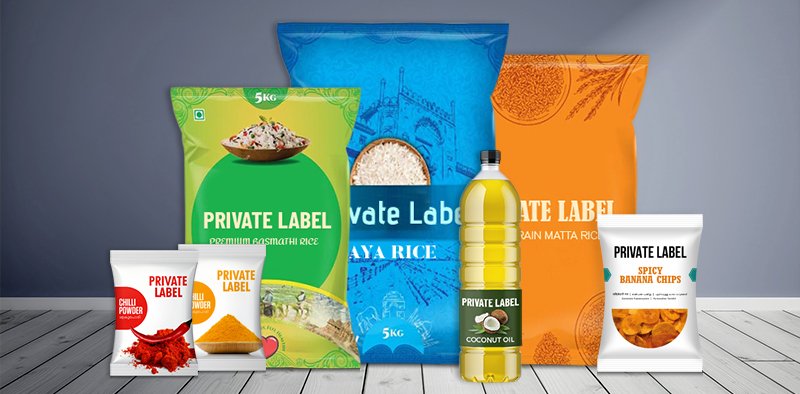
Private labelling is when a product is manufactured by one company but sold under another company’s brand name. For example, Indican AD Food sources high-quality products such as flours, spices, or Ayurvedic powders from trusted manufacturers in India and Asia, then packages and brands them under a client’s label for international markets.
Unlike traditional branding, private labelling allows businesses to:
- Build a unique identity without investing in factories or production units.
- Enter the market quickly with ready-to-sell products.
- Control packaging design, pricing, and brand positioning.
Why Private Labelling Is Growing Globally
The rise of private labelling is not a coincidence—it is driven by clear consumer and business trends.
1. Cost-Effective for Businesses
Private labelling eliminates the need for manufacturing infrastructure. Entrepreneurs and retailers can launch their brands with minimal upfront investment.
2. Higher Profit Margins
Since private-label products are sourced directly from manufacturers, the supply chain is shorter. Businesses can offer competitive pricing while maintaining higher margins.
3. Consumer Trust in Retail Brands
Shoppers today are open to alternatives beyond multinational FMCG brands. They are willing to try new products if quality is assured.
4. Customization and Flexibility
Private labelling allows businesses to customize packaging, flavours, and product types according to their target audience. For example, a Canadian retailer might want lentils in smaller packs for households, while a Middle Eastern distributor might prefer bulk packaging.
5. Market Expansion Opportunities
As global demand for ethnic foods, herbal wellness, and cultural products rises, private labelling makes it easier for businesses to reach niche markets with authentic products.
Global Private Label Market Trends
Recent reports show that private-label products are no longer “low-cost substitutes.” In fact:
- North America and Europe have seen steady growth in private-label grocery sales, often competing directly with premium brands.
- Asia-Pacific is witnessing an increase in private labelling in categories such as snacks, beverages, spices, and personal care.
- In Canada, private-label brands have become trusted household names in supermarkets, dollar stores, and online marketplaces.
This proves that private labelling is not just a trend but a long-term business model.
Key Sectors Driving Private Labelling in Food
At Indican AD Food, we see strong demand in the following categories:
- Flours & Pulses – Everyday staples like wheat flour, rice flour, chickpeas, and lentils.
- Spices & Masalas – Whole spices and custom blends tailored for regional markets.
- Snacks & Fryums – Affordable and popular options for both retail and wholesale buyers.
- Pooja & Devotional Items – Products like diyas, incense sticks, and torans under our Holly Hills brand.
- Herbal & Ayurvedic Powders – Amla, tulsi, hibiscus, and other natural products that cater to the global wellness trend.
How Indican AD Food Supports Private Labelling
Indican AD Food is more than just a trading company—we are a strategic partner for businesses that want to grow their brand in international markets. Here’s how we make private labelling seamless:
1. End-to-End Sourcing
We work directly with trusted manufacturers in India and Asia to ensure quality and consistency.
2. Custom Branding & Packaging
Clients can design their packaging, logo, and label. Our team ensures packaging meets international compliance standards.
3. Trade Licensing & Compliance
We simplify documentation, certifications, and customs requirements, saving businesses valuable time.
4. Global Distribution Network
With operations in Canada, USA, UK, New Zealand, Australia, UAE, and Pan-Asia, we ensure smooth logistics and timely delivery.
Why Businesses Choose Private Labelling Over Building Their Own Manufacturing
- Lower Investment Risk – No need to set up factories.
- Speed to Market – Products are ready for branding and sales.
- Focus on Growth – Businesses can invest time in marketing, sales, and customer acquisition instead of production.
- Scalability – Start small and scale up with growing demand.
Case Example: Building a Grocery Brand in Canada
Imagine a Canadian entrepreneur who wants to launch an ethnic food brand focusing on Indian flours and spices. Instead of spending years setting up production, they can partner with Indican AD Food. Within months, they get:
- High-quality products sourced from India.
- Custom-branded packaging with Canadian compliance labels.
- Logistics handled for import and distribution.
This way, the entrepreneur can focus on marketing and retail expansion, while Indican ensures the backend supply chain runs smoothly.
Future of Private Labelling in the Food Industry
As global trade expands and consumer preferences evolve, private labelling is expected to grow exponentially. With rising demand for authentic, natural, and culturally diverse products, private-label brands will continue to shape the shelves of supermarkets and online stores.
For businesses, this is an opportunity to differentiate, build customer loyalty, and capture niche markets without heavy investments.
Conclusion
Private labelling has become one of the most powerful strategies in global food trade. It allows businesses to:
- Build unique brands,
- Offer high-quality products at competitive prices, and
- Expand into international markets without complex manufacturing challenges.
At Indican AD Food, we specialize in helping businesses worldwide succeed with private labelling—from sourcing to packaging, compliance, and distribution. Whether you are a retailer, distributor, or entrepreneur, our expertise ensures your brand can thrive in the global marketplace.